Does your outlet smell like melting plastic or overheating wiring? That acrid scent is a warning sign of a potentially hazardous electrical problem within your walls, and ignoring it can lead to severe consequences, including appliance damage, electrical shocks, and even a devastating house fire.
Our licensed electricians are here to guide you through how to deal with an outlet that smells like it’s burning so that you can keep your home and loved ones safe. If you suspect your electrical outlet is malfunctioning, call us right away for a prompt electrical repair and then follow the steps outlined below.
Top Reasons Your Outlet Smells Like It’s Burning
What, exactly, does a burning outlet smell like? Many describe it as a melting plastic, fishy, or ozone-like odor. Of course, the specific smell your nose detects will depend on what’s going on behind the scenes. For example, your outlet may be producing a burning odor because of overheating plastic components or because of a malfunctioning device that’s plugged into it. Since there are an array of reasons why an electrical outlet may smell like it’s burning, it’s best to call an electrician to inspect the receptacle.
Overloaded Outlet or Circuit
Every electrical circuit in your home is designed to handle a specific amount of electricity. When you plug in too many high-power appliances into a single outlet or circuit, you exceed this limit. Eventually, the wiring inside your walls, the connections at the outlet, and the outlet itself will begin to heat up and may melt plastic components or insulation, which releases that telltale burning plastic smell.
Many of today’s homes have circuit breakers that should trip and cut the power in such an event. However, if the breaker is faulty or if your home has an outdated fuse box, the overheating can continue unchecked, significantly increasing the risk of a fire.
Loose Wiring and Faulty Connections
Over time, screw terminals can loosen, or “backstabbed” push‑in connections inside the receptacle can lose spring tension. The result is a poor electrical connection that results in an arc fault. An arc fault occurs when electricity jumps, or arcs, across the tiny gap created by the loose connection. This arc generates extreme heat and is hot enough to melt metal and ignite surrounding materials.
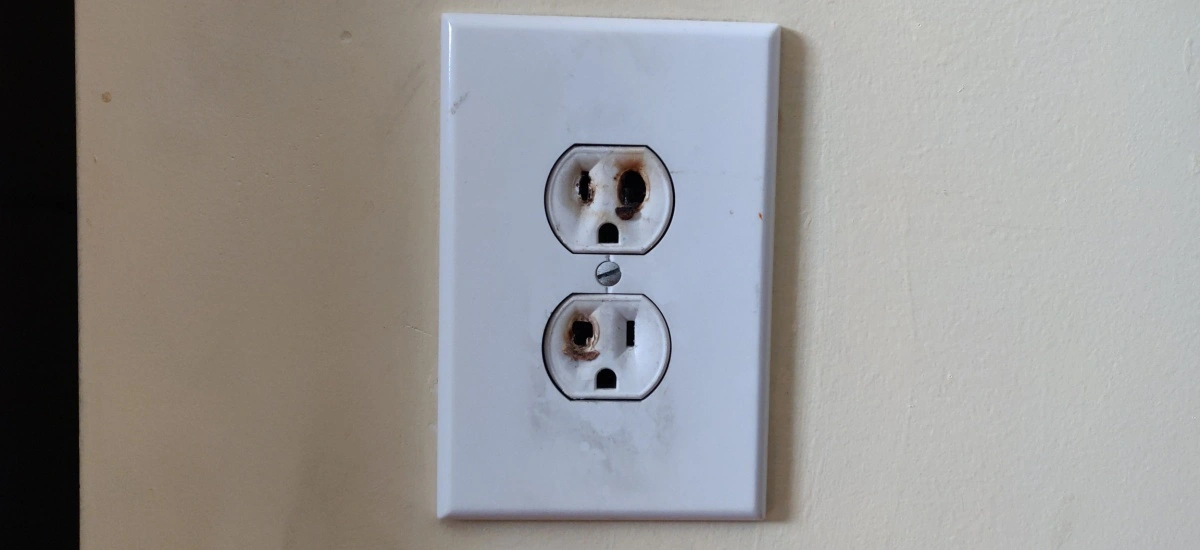
If loose or weak connections are the source of the burning smell, you may also hear a faint sizzling or crackling sound when you plug something into the outlet, see burn marks around the plug slots, or feel heat coming off the faceplate.
Aging or Damaged Wiring
The electrical wiring in your home doesn’t last forever. For example, the insulation that protects the wires can become brittle, cracked, or degraded. This is especially common in older homes that may still have outdated wiring systems, like knob-and-tube or aluminum wiring. When the insulation is compromised, the bare wires can come into contact with each other or with other materials, causing a short circuit. A short circuit creates a sudden, massive surge of current, which generates a great deal of heat and can easily melt the remaining insulation and surrounding materials.
Pests like mice or squirrels can also cause damage by gnawing on wires and stripping the insulation. Any physical damage to the wiring, whether from age or external factors, can lead to overheating and that dangerous burning smell.
Worn or Damaged Receptacle Contacts
Like any other component, outlets can wear out or sustain damage. Constant plugging and unplugging of cords can wear down the internal contacts in an outlet, leading to a poor connection with the plug’s prongs. This loose fit can cause arcing and overheating, especially when higher‑draw devices like vacuums, space heaters, or window A/C units are in use. Eventually, the heat will soften the receptacle body and produce a toasty plastic smell.
Outlets Damaged by Moisture Intrusion
Outlets in bathrooms, kitchens, garages, and outdoor living spaces are vulnerable to humidity, splashes, and spills. Over time, this moisture can corrode terminals or create conductive paths, leading to arcing (tiny sparks) that char insulation. If you smell burning near any outlets in these areas, moisture may be involved.
Cheap Adapters & Power Strips
Low‑quality splitters and bargain power strips often use undersized components that run hot under normal use. They can overheat at the plug or receptacle, melting plastic and releasing that strange “hot electronics” odor.
A Problem With the Plug or Appliance
Sometimes, the issue isn’t with the outlet or the house wiring, but with the device you have plugged into it. A faulty appliance cord with frayed wires, a damaged plug with bent prongs, or an internal malfunction within the appliance itself can cause it to draw too much power or create a short circuit. This can cause the plug to overheat, and that heat can transfer to the outlet, melting both the plug and the outlet.
If you only notice the burning smell when a specific appliance is plugged in, that device is the likely suspect. Unplug it immediately and inspect the cord and plug for any signs of damage, melting, or discoloration.
What to Do When You Smell a Burning Outlet
- Unplug If It’s Safe: Your first instinct might be to pull the plug, but resist the urge to touch the outlet or the plug directly, as it could be energized and pose a shock risk.
- Turn Off the Power: Go to your home’s main electrical panel (also known as a breaker box). Locate the circuit breaker that controls the power to the burnt electrical outlet and switch it to the “OFF” position. If your breakers aren’t labeled, you may need to turn off the main breaker to cut power to the entire house.
- Unplug All Devices: Once the power is safely off, you can return to the outlet and unplug any cords or home appliances that were connected to it.
- Do a Visual Inspection: Look closely at the outlet and the plugs you just removed. Do you see any black or brown scorch marks? Is any of the plastic melted or discolored? Does the outlet feel warm? This information could be helpful to share with your local electrician.
- Do Not Use the Outlet: Under no circumstances should you use the outlet again until it has been inspected and repaired by a qualified professional. Do not simply flip the breaker back on and assume the problem is solved. The underlying issue still exists and will likely cause the same problem again, perhaps with worse consequences.
Call a Licensed Electrician: Electrical work is complex and dangerous, so you will need a professional to diagnose the problem accurately and ensure the repair is done safely and up to code. Our team at Saffer Electrical will inspect the outlet, the box, and the circuit from end to end. If needed, we’ll open the receptacle and check for charred insulation, loose screws, and overheated conductors, then make the necessary repairs.
Schedule an Outlet Repair Service With Saffer Electrical
If you’ve noticed a hot, plastic, or electrical odor coming from a specific outlet, turn off the circuit right away and call Saffer Electrical. Our licensed electricians will use specialized tools like a circuit tester and a multimeter to safely test the outlet and circuit. Once the problem is identified, we will outline the necessary repairs and then perform the work to the highest safety standards and in compliance with the National Electrical Code.
Contact our team today to schedule a service, and breathe easy knowing that the dangerous situation is being handled appropriately.