
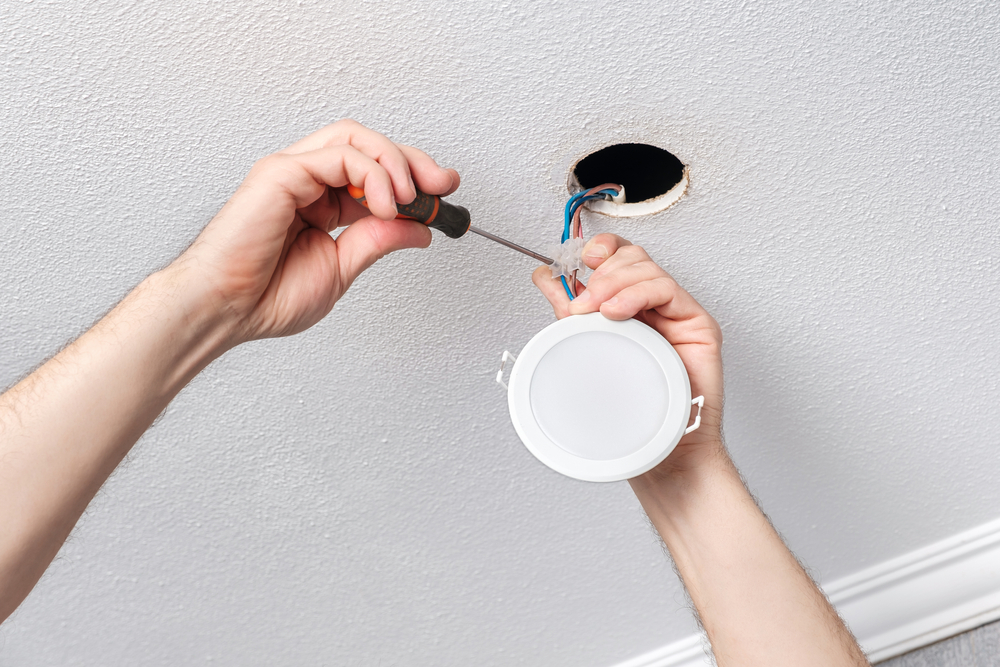
Homeowners looking to update their lighting often ask a simple question that comes with real risk attached: Can I install a light fixture myself?
On the surface, swapping out a ceiling light can seem like an easy renovation task. The reality is that working with electrical wiring and existing circuits brings safety, code, and performance concerns that are not always obvious at first glance.
This guide breaks down the pros and cons of DIY light fixture installation so that you can make an informed decision about your home and safety.
Understanding What a Light Fixture Installation Really Involves
Installing lighting is not limited to attaching a fixture to the ceiling and flipping a switch. Most projects involve working directly with electric systems that are tied to the circuit breaker, wiring behind walls, and other electrical components that affect the entire home.
What Happens Beyond the Ceiling
Many older homes have electrical wiring that was installed decades ago. That wiring may not support modern lighting designs, ceiling fan installation, or heavier fixtures. And during a new installation, issues such as brittle wire insulation, undersized junction boxes, or overloaded circuits can create additional problems in an instant.
A homeowner without electrical training may not see the risk until a problem leads to a power outage or damaged equipment. An experienced electrician, on the other hand, is trained to recognize these conditions during an inspection.
Why a DIY Lighting Installation May Seem Appealing
DIY lighting projects are often appealing to homeowners who want an instant solution at a seemingly lower price. In fact, many believe a do-it-yourself installation can provide a range of benefits, including:
- Lower upfront cost compared to hiring an electric company
- Flexible scheduling that fits around renovation plans
- Personal satisfaction from completing electrical work independently
- Faster completion for very simple replacements
However, what they do not realize is that these benefits are really just a smoke-screen. And in many instances, what starts as a simple project actually turns into a failure that requires even more expensive repairs.
The Risks of DIY Light Fixture Installation
Working with electricity carries risks that extend beyond the immediate task. Improper installation can impact safety, system performance, and reliability throughout the home in the long term.
Electrical Safety and Fire Risks
Lighting circuits share power with outlets, smoke detector systems, and other critical devices. A mistake during installation can compromise multiple parts of the home’s electrical services. Even small errors can strain the circuit breaker and cause repeated tripping or system failure.
Additionally, as we mentioned earlier, it’s very easy to miss existing problems. Once you complete the lighting installation, you may not realize that incorrect wire connections, loose fittings, and damaged insulation are affecting the fixture’s performance. Eventually, these problems will lead to overheating and fire hazards.
Code Compliance and Inspection Issues
Local construction and electrical policy requirements apply to lighting installation, especially during renovation or basement finishing projects. Work that does not meet code can fail inspection during a sale or insurance review.
Licensed electricians stay current with local regulations and will make sure your electrical work doesn’t bypass these standards and become expensive to correct later.
Impact on Warranty and Insurance
Many lighting manufacturers include a warranty that depends on professional installation. Improper installation can void coverage and leave the homeowner responsible for replacement costs later on.
Insurance providers may also deny claims related to electrical damage if unlicensed work is discovered. This can affect customer satisfaction long after the project is complete.
When Hiring an Electrician Is the Better Choice
Some lighting projects clearly fall outside the scope of safe DIY work. Recognizing these situations helps protect both the home and the people inside it.
Situations That Call for Professional Electrical Services
Hiring a licensed electrician is strongly recommended when a lighting project includes:
- New wiring or relocation of fixtures
- Ceiling fan installation with added structural support
- Kitchen, bathroom, or basement lighting upgrades
- Work connected to a renovation or construction project
- Installation near plumbing
These scenarios require expert planning, proper materials, and tested connections.
Emergency Scenarios
If a lighting installation results in flickering lights, warm switches, or a burning smell, it may signal a larger electrical problem. In these cases, emergency electrical services are the right response. An electrician can diagnose the issue, restore service, and help prevent future emergencies tied to wiring faults or overloaded circuits.
DIY vs. Professional Lighting Installation: Why Professional Is the Way to Go
Professional electricians bring experience, training, and precision to every lighting installation. Their expertise ensures your lighting system is installed correctly the first time, saving you stress, time, and potential repair costs.
Here’s a closer look at why you should hire a professional electrician for a lighting installation:
Safety First
Professional electricians are trained to follow strict safety protocols that reduce the risk of electrical shocks, short circuits, and fire hazards. For example, they understand how to properly shut down power, use the correct materials, and install fixtures without compromising your home’s electrical system. By hiring a professional, you gain peace of mind knowing your lighting installation is completed safely and built to protect everyone in your home.
Code Compliance
Electrical codes exist to ensure safety, efficiency, and long-term reliability, but they can be complex and easy to overlook during a DIY project. A licensed electrician stays up to date on local and national electrical codes and ensures every aspect of your lighting installation meets these standards. Proper code compliance helps you avoid fines, failed inspections, and complications during future renovations or home sales. More importantly, it ensures your lighting system is legally and safely installed from day one.
Proper Load Balancing
When lighting is installed without considering the existing electrical demand, circuits can become overloaded, leading to flickering lights, tripped breakers, or long-term damage to your electrical panel. A qualified electrical contractor evaluates your system as a whole and distributes the electrical load correctly. This ensures your lighting operates efficiently without compromising the performance of other appliances or systems in your home.
Expert Troubleshooting on the Fly
It’s not uncommon for a lighting installation to reveal underlying electrical issues. Expert electricians are trained to identify and resolve these problems before they escalate. This proactive approach prevents recurring problems and helps ensure your lighting system performs reliably for years to come.
Quality Results That Last
A professionally installed lighting system doesn’t just function better; it looks better, too. Electricians ensure fixtures are securely mounted, evenly spaced, and properly aligned for optimal performance and aesthetics.
Saving Time, Money, and Hassle
While DIY lighting projects may appear cheaper upfront, mistakes can quickly turn into expensive fixes. Hiring a professional electrician eliminates guesswork and reduces the chance of future electrical problems. Plus, you won’t have to spend hours researching wiring diagrams or troubleshooting unexpected issues.
Request a Quote From Saffer Electrical
If you are considering a lighting project and want expert guidance, Saffer Electrical is here to help. From simple fixture replacement to complex wiring services tied to renovation, our team delivers reliable service with pride.
Reach out today to request a quote and speak with a licensed electrician who understands the needs of local customers and values safety and quality electrical work.